Nutrition · Fat loss
Low-Calorie-Dense Foods: The Best High-Volume Foods for Weight Loss and Fullness
Bigger portions, balanced meals. A practical guide to calorie density, filling foods and smarter nutrition during fat loss.
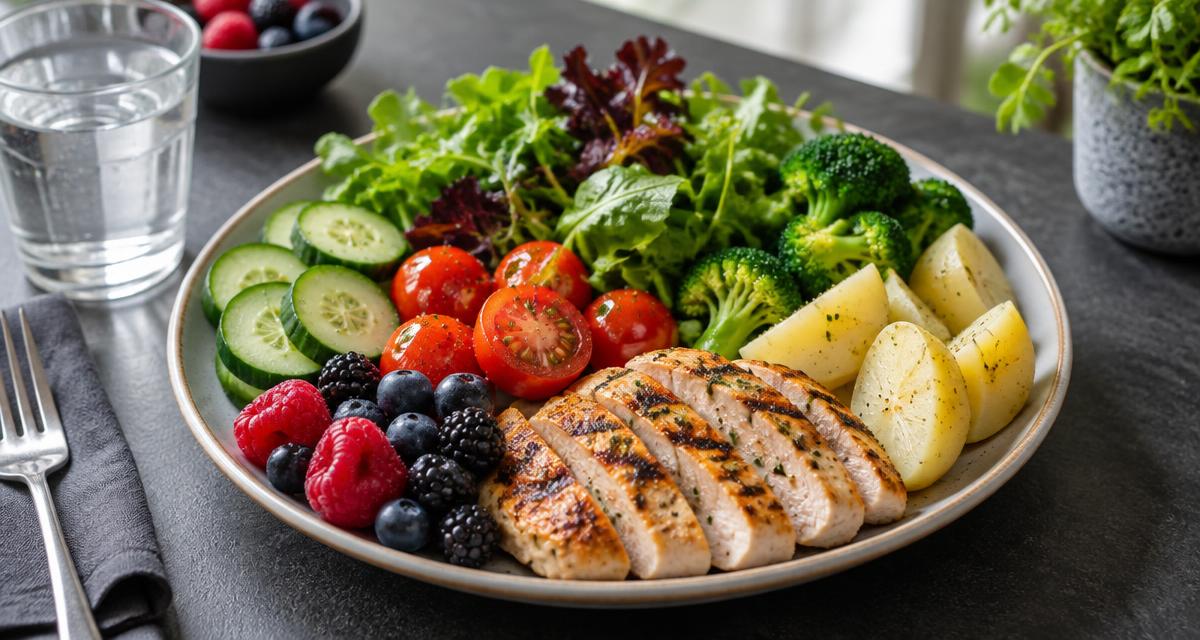
One of the hardest parts of fat loss isn't knowing that you need a calorie deficit. It's staying in that deficit without feeling like every meal is too small. You finish dinner, the plate looked reasonable, and an hour later you're standing in front of the fridge again.
This is where low-calorie-dense foods earn their place. The goal is not simply to eat less food — it's to make the food you eat work harder for your calorie budget. When you understand calorie density, you can build bigger, more satisfying plates that still fit your numbers, instead of shrinking portions until the diet feels unbearable.
In this guide you'll learn what calorie density actually means, why water and fiber change everything, which practical foods give you the most volume for the fewest calories, and how to build balanced meals around them — without demonizing fat, carbs, or any food you enjoy.
What Are Low-Calorie-Dense Foods?
Calorie density — also called energy density — is the amount of energy (calories) contained in a given amount of food, usually expressed per gram or per 100 grams.
A water-rich vegetable like cucumber can fill a large part of your plate while providing very few calories. The same weight of olive oil or peanut butter contains many times more energy, because fat provides about 9 calories per gram — more than double the roughly 4 calories per gram from protein or carbohydrate. Water, on the other hand, adds weight and volume with zero calories, which is why watery foods are naturally low in calorie density.
One important clarification before we go further: calorie density and nutritional quality are different concepts. Olive oil is calorie-dense and nutritious. Soda is relatively low in calories per gram compared to oil, and far less nutritious. Calorie density is a portion-planning tool, not a health score.
Why Low-Calorie-Dense Foods Can Help With Weight Loss
Fat loss still requires a sustained calorie deficit — no food changes that. What low-energy-density foods change is how that deficit feels. A systematic review of dietary energy density suggests that eating patterns built around lower-energy-density foods can support weight management, partly because increasing food volume can reduce intake at a meal.
When more of that daily food weight comes from water- and fiber-rich choices, total calorie intake often drops without anyone deliberately eating "less". Your stomach registers volume, your meals look generous, and the deficit stops feeling like punishment. Individual results vary, but as a practical strategy it's a useful way to make a calorie target livable.
- More food volume for the same calories — plates look and feel full.
- Water-rich foods add volume; fiber and food texture can support fullness.
- Larger portions make a calorie deficit easier to sustain week after week.
- Less reliance on willpower, because meals are genuinely satisfying.
Water + Fiber: The Secret Behind Food Volume
Two ingredients drive calorie density down more than anything else: water and fiber. Water supplies no calories; some fiber is fermented and contributes a small amount of energy. Both can add bulk, but fullness also depends on protein, texture, total intake and personal preferences.
Vegetables and fruits are typically 80–95% water. Soups turn that water into a first course that takes time to eat. Legumes and whole grains pair water with fiber and resistant starch, which can make lentil soup a satisfying choice compared with a small portion of crackers.
One practical note: if you're not used to high-fiber eating, increase your intake gradually over a couple of weeks and drink enough water. Jumping straight to huge servings of beans and cruciferous vegetables is a recipe for digestive discomfort, not better results.
Best Low-Calorie-Dense Foods: A Practical Food List
Here are practical choices, grouped by category. Calorie values are approximate per 100 g, based on common reference data such as USDA FoodData Central, and refer to raw vegetables and fruit, plain non-fat yogurt, and cooked foods where marked. Soup varies by recipe; popcorn is low in calories per cup, not per gram.
Leafy Greens, Cruciferous and High-Water Vegetables
| Food | Calories per 100 g (approx.) | Why it helps | Best way to use it |
|---|---|---|---|
| Leafy greens (spinach, lettuce) | 15–25 kcal | Water-rich with fiber and micronutrients | Base of salads, wilted into eggs and rice dishes |
| Cucumber | 15 kcal | 95% water, very filling per calorie | Sliced into salads, yogurt dips, snacks |
| Zucchini | 17 kcal | Mild flavor, absorbs sauces | Grilled, spiralized, added to stews |
| Tomatoes | 18 kcal | Water-rich, adds acidity and flavor | Salads, sauces, roasted sides |
| Mushrooms | 22 kcal | Meaty texture with minimal calories | Sautéed as a side, bulk out minced meat dishes |
| Broccoli | 34 kcal | Fiber, volume and micronutrients | Steamed or roasted with lean protein |
| Cauliflower | 25 kcal | Versatile rice and mash substitute | Riced, roasted, blended into soups |
| Bell peppers | 25–30 kcal | Sweet crunch, high vitamin C | Raw snacks, stir-fries, stuffed peppers |
| Cabbage | 25 kcal | Cheap, crunchy, very high volume | Slaws, soups, stir-fries |
Fruits
| Food | Calories per 100 g (approx.) | Why it helps | Best way to use it |
|---|---|---|---|
| Strawberries | 32 kcal | Sweet, watery, high fiber for a fruit | With Greek yogurt, oats, or as dessert |
| Watermelon | 30 kcal | 92% water; large servings feel indulgent | Chilled slices, fruit salads |
| Oranges | 47 kcal | Fiber and chewing slow you down vs juice | Whole fruit as a snack rather than juice |
| Grapefruit | 42 kcal | Tart, watery, very filling | Half a fruit at breakfast |
| Apples | 52 kcal | Crunchy, portable, high satiety per calorie | Whole fruit snacks, sliced into salads |
Protein-Rich Lower-Density Choices
| Food | Calories per 100 g (approx.) | Why it helps | Best way to use it |
|---|---|---|---|
| Non-fat Greek yogurt | 59 kcal | High protein, creamy, versatile | Breakfast bowls, sauces, dips |
| Skinless chicken breast (roasted) | 165 kcal (roasted) | The classic lean protein anchor | Grilled, sliced over salads and bowls |
Potatoes, Starchy Foods and Legumes
| Food | Calories per 100 g (approx.) | Why it helps | Best way to use it |
|---|---|---|---|
| Potatoes (boiled/baked) | 87–93 kcal | A satisfying starch when simply prepared | Baked, boiled, air-fried — watch the toppings |
| Lentils (cooked) | 116 kcal | Protein + fiber combo, extremely filling | Soups, stews, salads |
Broth-Based Soups and Air-Popped Popcorn
| Food | Calories per 100 g (approx.) | Why it helps | Best way to use it |
|---|---|---|---|
| Broth-based vegetable soup | 20–40 kcal | Warm, slow to eat, hydrating | Starter before dinner to tame appetite |
| Air-popped popcorn | 387 kcal per 100 g air-popped; about 31 kcal per 8 g cup | Huge volume per serving | Evening snack, seasoned without butter |
Nutrition values are approximate and can vary by variety, brand, cooking method, and serving size.
Low-Calorie-Dense Foods vs High-Calorie-Dense Foods
Compare foods by weight, not by how large they look. The values below are approximate kcal per gram from common USDA reference foods. Raw and cooked foods are identified because cooking changes water content. Neither side is automatically healthier: use lower-density foods for volume and higher-density foods for nutrients and flavor.
| Food / category | Approx. kcal/g | Characteristics | Practical use |
|---|---|---|---|
| Leafy greens, raw | 0.15–0.25 | Water-rich | Large salad base |
| Cucumber, raw | 0.15 | Crunchy, water-rich | Snack or salad |
| Tomatoes, raw | 0.18 | Juicy | Salads and sauces |
| Strawberries, raw | 0.32 | Whole-fruit fiber | Yogurt topping |
| Potatoes, boiled | 0.87 | Water-rich starch | Meal carbohydrate |
| Chicken breast, roasted | 1.65 | Lean protein | Protein anchor |
| White rice, cooked | 1.30 | Hydrated starch | Carbohydrate portion |
| Almonds, raw | 5.79 | Fats, fiber, minerals | Measured topping |
| Peanut butter, smooth | 5.88 | Concentrated fat and protein | Measured spoon |
| Olive oil | 8.84 | Concentrated dietary fat | Measured dressing |
Approximate reference values; variety, brands and preparation change the numbers. Check the matching USDA food entry or your product label.
Common Mistakes When Choosing Low-Calorie Foods
- Eating only vegetables and too little protein.
- Avoiding every source of dietary fat.
- Assuming healthy foods are always low calorie.
- Overlooking drinks, oils, dressings and nut butter.
- Ignoring total intake or choosing a restrictive diet you cannot maintain.
Virtually all foods provide some calories. ‘Negative calorie foods’ is a misleading claim: digestion does not turn celery or cucumber into a reliable calorie deficit. Use vegetables to improve meals, not as a promise of effortless fat loss.
Low-Calorie-Dense Does NOT Mean Unlimited
This is the section most articles skip — and the one that saves your results. Low-calorie foods still contribute calories, and the company they keep matters more than the foods themselves.
- A huge salad becomes a 700-calorie meal once you add generous olive oil, cheese, croutons and creamy dressing.
- Nuts, nut butter, cheese, oils and dressings are nutritious — and extremely calorie-dense. A "small handful" is easy to underestimate.
- Dried fruit is far more calorie-dense than whole fruit: the water is gone, the sugar is concentrated, and portions shrink visually.
- Smoothies and juices go down faster than whole fruit, removing the chewing and fiber structure that make fruit filling.
The goal is not to eliminate calorie-dense foods. The goal is to build meals intelligently: let low-density foods carry the volume, and let calorie-dense foods appear in measured, deliberate amounts.
How to Build a Filling Low-Calorie Meal
Use this simple formula for most lunches and dinners:
- 1. Start with a lean protein source — chicken, white fish, shrimp, Greek yogurt, egg whites, lentils.
- 2. Add a large serving of vegetables — half the plate is a good default.
- 3. Add a sensible carbohydrate source — potatoes, rice, oats, whole-grain bread.
- 4. Add a controlled amount of healthy fat — measure the olive oil, don't pour it.
- 5. Finish with fruit or another high-volume option when you want more.
Four example meals
- Grilled chicken + roasted vegetables + baked potato + yogurt-garlic sauce.
- Greek yogurt bowl + mixed berries + oats + a measured spoon of honey.
- Vegetable soup + lean protein + a whole-grain side.
- Eggs + vegetables + boiled potatoes, seasoned with herbs and spices.
Portions should be adjusted to your own calorie and protein needs — which is exactly what our free fitness tools are for. Use the Calorie Calculator, Protein Calculator, BMI Calculator, Water Intake and Body Fat Estimator to set your personal targets before you start building plates.
High-Volume Eating vs. Balanced Nutrition
"Volume eating" — maximizing food volume per calorie — is a useful tactic, but it is not a complete diet. Eating huge amounts of vegetables while neglecting protein, essential fats, carbohydrates and micronutrients will leave you under-muscled, under-fueled and eventually ravenous.
If you train to build or preserve muscle, protein remains the anchor of every meal. Low-calorie-dense foods are the supporting cast that lets you hit your protein and calorie targets comfortably — not a replacement for them.
Best Low-Calorie-Dense Foods for a Calorie Deficit: Shopping List
Print this or save it for your next grocery run:
- Vegetables: leafy greens, cucumbers, zucchini, tomatoes, broccoli, cauliflower, peppers, cabbage, mushrooms.
- Fruits: berries, strawberries, watermelon, oranges, apples, grapefruit.
- Lean protein: chicken breast, white fish, shrimp, egg whites, low-fat cottage cheese.
- Legumes: lentils, chickpeas, mixed beans.
- Lower-calorie dairy: non-fat Greek yogurt, low-fat milk.
- Whole grains & starches: oats, potatoes, sweet potatoes, whole-grain bread.
- Pantry: low-sodium broth, canned tomatoes, vinegar, herbs and spices for flavor with relatively few calories.
Are Low-Calorie-Dense Foods Better Than High-Calorie-Dense Foods?
Some of the healthiest foods in your kitchen are also the most energy-dense: olive oil, nuts, seeds, nut butter, avocado, cheese and dried fruit. None of them are "bad" — they can provide valuable fats, minerals or other nutrients, depending on the food.
Best Low-Calorie-Dense Foods for Cutting and Muscle Preservation
If your goal is building or preserving muscle while controlling body fat, the formula barely changes — the balance does. Combine lean protein + vegetables + strategic carbohydrates:
- Chicken breast + potatoes + a large serving of vegetables.
- White fish + rice + a big salad.
- Greek yogurt + berries + oats.
- Egg whites + one or two whole eggs + vegetables + toast.
One honest caveat: in a dedicated muscle-building phase you may need to eat more calories than appetite allows, and aggressively prioritizing low-density foods can make eating enough genuinely difficult. In that phase, calorie-dense foods like rice, oats, olive oil and dried fruit become useful tools rather than obstacles.
How to Eat More Food While Eating Fewer Calories
- Add a vegetable serving to every main meal — don't wait for dinner.
- Choose whole fruit instead of juice.
- Start dinners with a broth-based soup when appetite is high.
- Anchor every meal with lean protein.
- Measure calorie-dense toppings: oils, nuts, cheese, dressings.
- Use potatoes and legumes strategically — they can be satisfying carbohydrate choices.
- Eat slowly; fullness signals take time to register.
- Track calories for a few weeks if you're unsure where your intake really sits.
No strategy eliminates hunger completely during a deficit — and anyone promising that is selling something. The aim is manageable, occasional hunger instead of constant, diet-ending hunger.
The Smart Way to Use Calorie Density
The goal isn't to eat the lowest-calorie foods possible. The goal is to create meals that give you enough protein, fiber, nutrients, satisfaction and food volume for your individual calorie needs. Calorie density is a compass, not a cage.
If you're not sure where to start, take the Smart Fitness Assessment — answer 6 questions and receive an instant personalized estimate of your calories, protein and next steps.
Your goal isn't to eat as little as possible. It's to build meals that give you enough protein, fiber, nutrients and satisfaction while fitting your calorie needs. If you want a more personalized starting point, try the Smart Fitness Assessment or use Saed Coach Pro's free fitness tools. And if you're ready for a plan built around your body, schedule and goal, Contact Coach Saed on WhatsApp.
Low-Calorie-Dense Foods FAQ
What are low-calorie-dense foods?
Foods that provide relatively few calories per gram of weight — typically because they are rich in water and fiber. Examples include most vegetables, fruits, broth-based soups, lean proteins and cooked legumes.
What foods have the lowest calorie density?
Water-rich vegetables sit at the bottom of the scale: leafy greens, cucumber, zucchini, tomatoes and celery are often under 25 calories per 100 g. Broth-based soups are similarly low.
Are low-calorie-dense foods good for weight loss?
They can make weight loss easier by letting you eat satisfying portions within a calorie deficit, and research links lower-energy-density eating patterns with better weight management. But fat loss still requires a sustained calorie deficit — no food causes it independently.
What is the difference between calorie density and nutrient density?
Calorie density measures energy per gram of food; nutrient density measures vitamins, minerals and other beneficial compounds per calorie. Olive oil is calorie-dense and nutrient-rich; diet soda is low-calorie and nutrient-poor. You need both concepts to judge a food well.
Can I eat high-calorie foods and still lose weight?
Yes. Weight loss depends on your total calorie balance, not on avoiding specific foods. Nuts, olive oil, avocado and cheese can all fit into a fat-loss plan when portions are measured.
Are potatoes considered low-calorie-dense?
Yes — boiled or baked potatoes provide roughly 87–93 calories per 100 g and can be a satisfying source of carbohydrates. What raises their calorie density is preparation: frying, butter and creamy toppings.
What are the best low-calorie-dense foods for a calorie deficit?
A practical shortlist: leafy greens, cruciferous vegetables, berries, watermelon, oranges, Greek yogurt, egg whites, white fish, chicken breast, lentils, beans, potatoes, oatmeal and broth-based soups.
How can I eat more food while controlling calories?
Build each meal around lean protein and a large serving of vegetables, add a sensible carb source like potatoes or oats, measure oils and toppings, choose whole fruit over juice, and use soups and high-volume snacks when appetite is high.